
Find Unclaimed Money in Virginia
Virginia holds millions of dollars in unclaimed money for residents who may not know these funds exist. The Virginia Department of the Treasury tracks this property and makes it available through a free search at vamoneysearch.gov. You can look up Virginia unclaimed money by name in minutes. Property types include old bank accounts, uncashed checks, utility deposits, unpaid wages, insurance proceeds, and more. There is no cost to search, no cost to file a claim, and no deadline on when you can come forward. If you have ever lived or worked in Virginia, unclaimed money may be waiting for you right now.
Virginia Unclaimed Money at a Glance
How to Search Virginia Unclaimed Money
The official search tool for Virginia unclaimed money is vaMoneySearch.gov, run by the Virginia Department of the Treasury Division of Unclaimed Property. Enter your last name and the state and the system will pull up any property reported in your name. No account or login is needed. The site works on phones, tablets, and desktop computers. Once you find a match, you can view property details and start the claim process right on the same site. Document uploads are handled online, so most claims can be finished without visiting any office in person.
Try a few different versions of your name to get the best results. Search your full legal name first. Then search just your last name to see all matches. If you have ever gone by a different name, a nickname, or a maiden name, search those too. Prior addresses do not matter when you run the search. Property in the database comes from banks, utilities, employers, insurance companies, and many other types of businesses. A match might show up from a company you dealt with years or even decades ago.
The Division also has a toll-free phone line at (800) 468-1088 for residents who want help with their search or claim. The office mailing address is P.O. Box 2478, Richmond, VA 23218-2478. The Division is directed by Bradley Earl and is part of the Virginia Department of the Treasury.
The Virginia official unclaimed property search portal at vaMoneySearch.gov lets any resident search the state database by name at no charge.
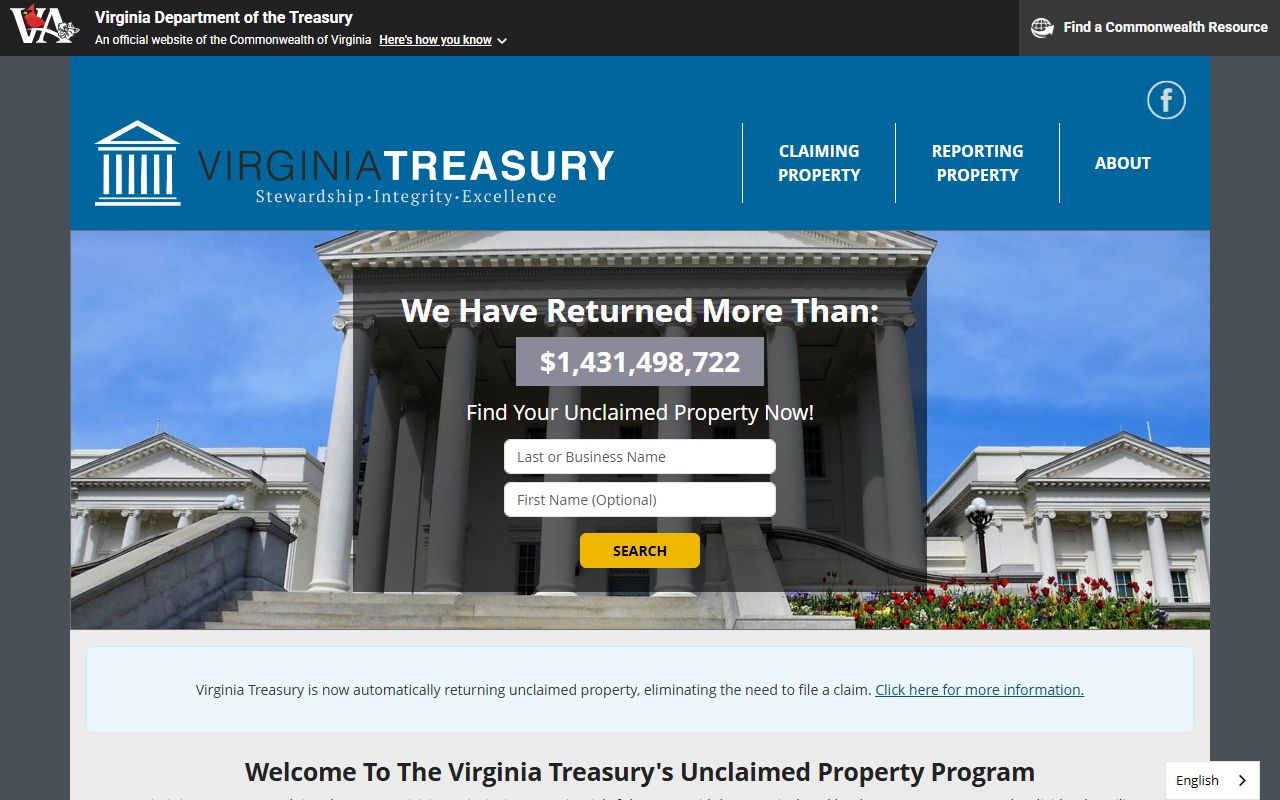
The portal allows document uploads and claim tracking, so the entire process can be completed online without a trip to any state office.
Note: Virginia does not charge any fee to search or claim unclaimed property. Any third-party website asking you to pay for a search is not affiliated with the state program.
Virginia's VA Cash Now Program
Virginia launched the VA Cash Now program to speed up the return of unclaimed money to rightful owners. Under this program, single-owner properties worth up to $5,000 can be returned automatically when the information in the state database matches verified taxpayer records and current address data. Owners do not need to file a claim. The Virginia Treasury mails a notification letter, and a check typically arrives within 45 days. The program has already returned more than $11.5 million to Virginia residents. Properties above $5,000, those with multiple owners, and claims involving businesses or heirs still go through the standard claims process.
The VA Cash Now law was passed by the Virginia General Assembly to cut red tape and return funds faster. Asset types covered by the program include inactive bank accounts, uncashed checks, refunds, securities, unpaid wages, and insurance proceeds. If you receive a letter from the Virginia Treasury about a VA Cash Now return, no action is needed on your part. The check will come in the mail. More background on the program is covered in a WTKR news report on the VA Cash Now rollout.
A WTKR news report covers how Virginia's VA Cash Now law has returned over $11.5 million to state residents since the program began.
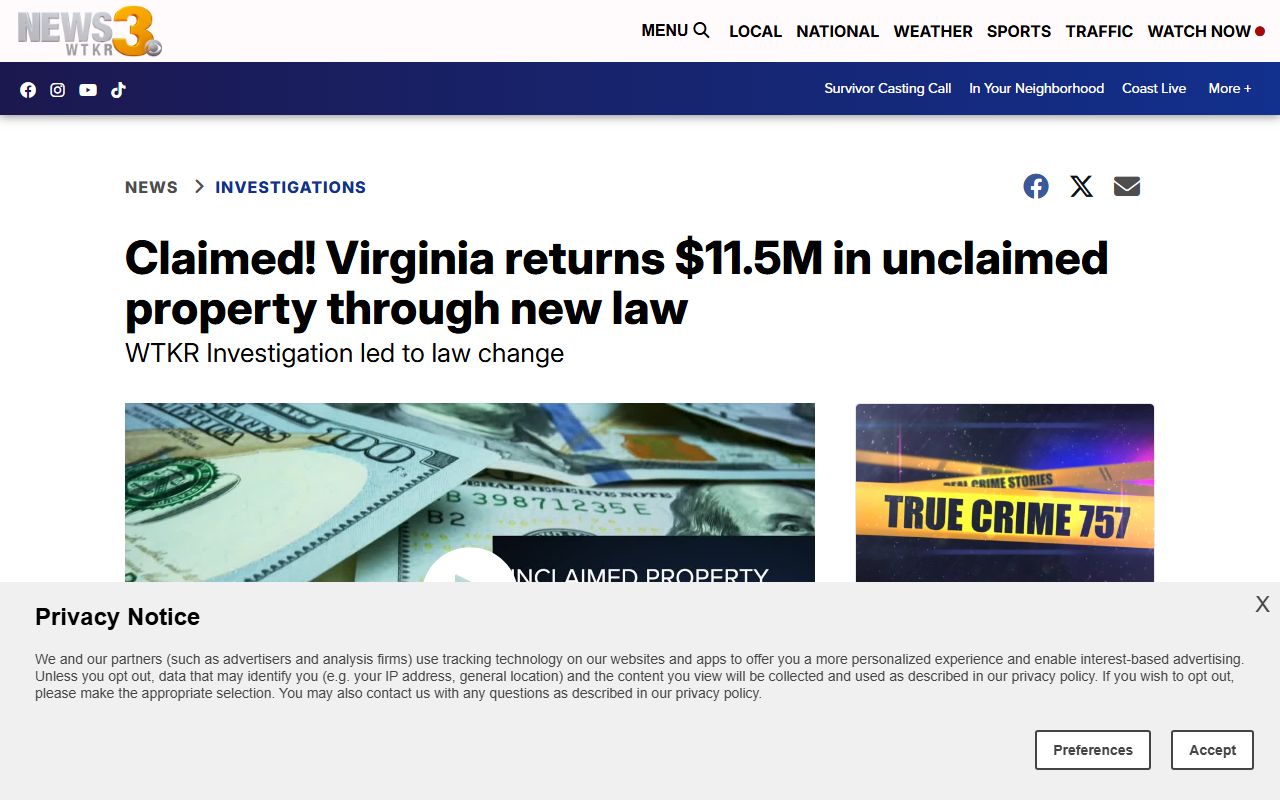
The automatic return program applies only to single-owner properties with values at or below the $5,000 threshold set by state law.
What Counts as Virginia Unclaimed Money
Virginia unclaimed property covers a wide range of financial assets. Under Title 55.1, Chapter 25 of the Code of Virginia, the Virginia Disposition of Unclaimed Property Act defines property broadly. It covers tangible and intangible personal property, which includes cash, checks, deposits, interest, dividends, and most other types of financial assets that can be owed to a person. Banks report dormant checking and savings accounts. Insurance companies report matured policies and unclaimed death benefits. Employers report wages, commissions, and other pay that was never picked up. Utilities report deposits held past the required period. Government agencies also remit funds that have gone unclaimed.
Property from nearly any source can end up as Virginia unclaimed money. A tenant leaves a security deposit behind after moving. Someone passes away without family knowing about an old life insurance policy. A stock dividend is mailed to an address from a decade ago and comes back undeliverable. An old bank account sits untouched for years. All of this eventually flows into the state's custody under the rules set out in the Act. Since 1961, more than $1 billion has been paid out to Virginians through this program.
Common types of unclaimed money held by Virginia include bank account balances, uncashed checks, payroll and wages, utility deposits, insurance proceeds, investment account funds, stock dividends, bonds, savings bonds, refunds, and safe deposit box contents. Virtually any financial asset owed to a person and left dormant long enough can end up here.
The Virginia Disposition of Unclaimed Property Act sets the full legal framework for how these funds are collected, held, and returned to owners.
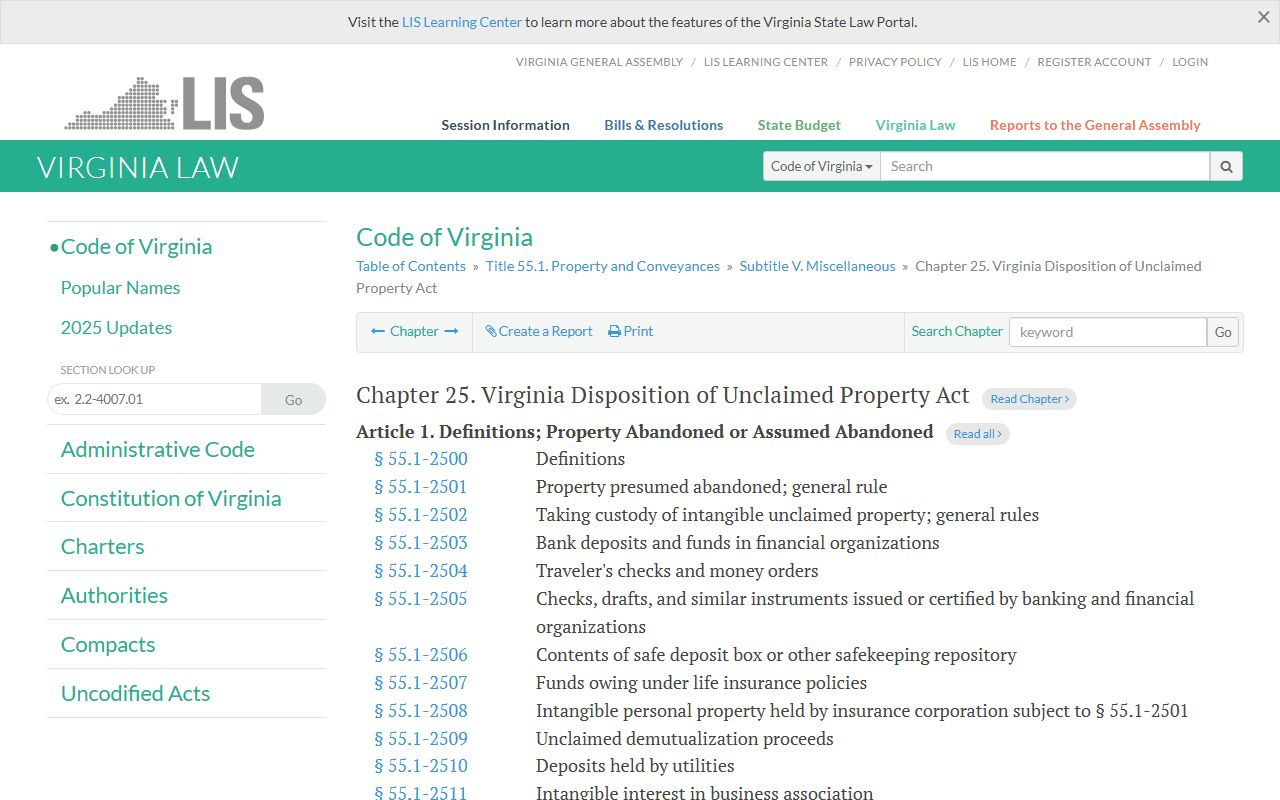
The law has been in effect since 1961 and has been updated over time to keep pace with new types of financial products and accounts.
How Long Before Property Becomes Unclaimed in Virginia
Virginia law sets different dormancy periods for different types of property. The dormancy period is how long an asset must sit without activity or owner contact before it is presumed abandoned. The general rule under Section 55.1-2501 of the Code of Virginia is five years, which covers most bank accounts, CDs, investment accounts, and other financial assets. Some property types have shorter periods. Wages and payroll go dormant after just one year without activity. Life insurance proceeds are presumed abandoned after two years. Traveler's checks have a longer window of fifteen years before they are reportable.
These dormancy periods start from the date of last activity, the last payment made, or the last time contact was made between the holder and the owner, depending on the type of property. Once the dormancy period expires, the business holding the funds must report and remit them to the Virginia Department of the Treasury under Section 55.1-2524. From that point, the state holds the funds indefinitely until the owner comes forward. There is no time limit to claim.
Common dormancy periods in Virginia:
- Wages, payroll, and salary: 1 year
- Life insurance proceeds: 2 years
- Checking and savings accounts: 5 years
- Certificates of deposit: 5 years
- Investment and brokerage accounts: 5 years
- Official bank checks and money orders: 5 years
- Traveler's checks: 15 years
Note: Gift certificates and utility refunds follow separate rules under Virginia law. Check the full text at Title 55.1, Chapter 25 for your specific asset type.
How to Claim Virginia Unclaimed Money
Filing a claim for Virginia unclaimed money starts at vaMoneySearch.gov. Search for your name, find the property that belongs to you, and select it to start the claim. The site will walk you through what documents you need based on the type of property and your connection to it. Most claims ask for a government-issued photo ID, proof of your current address, and something that connects you to the old address or account where the property came from. For a bank account, an old account number helps. For wages, your Social Security number and prior employer information are useful.
Documents are uploaded directly on the site. Paper mailing is available for those who prefer it, but online submission is faster. Once all required documents are received, the Treasury processes the claim within 60 days under Section 55.1-2532 of the Code of Virginia. Most straightforward claims are resolved faster than the 60-day limit. If anything is missing from your submission, you will receive notice of what else is needed before the claim can move forward. Disputed claims may involve a hearing conducted by the Treasury.
There is no deadline to file. Property held by Virginia can be claimed at any time, whether it was reported to the state last year or thirty years ago. Once a claim is approved and paid, that claim is closed. The state does not charge any fee at any step of the process.
For more detail on how Virginia's reporting and claims process works, the National Association of Unclaimed Property Administrators lists key Virginia program details including contact information and deadlines.
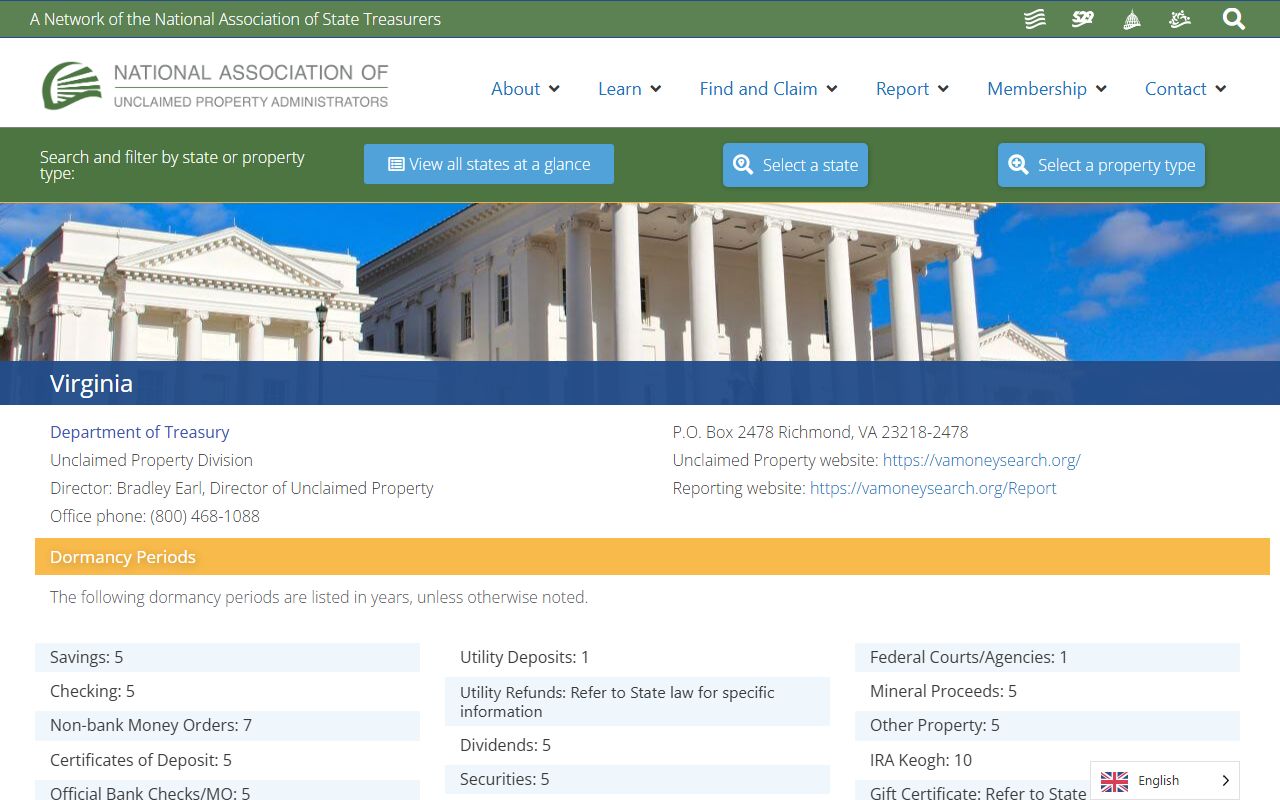
The NAUPA page for Virginia confirms that the Division office is at P.O. Box 2478, Richmond, VA 23218-2478 and can be reached at (800) 468-1088.
Who Reports Unclaimed Money to Virginia
Any business or entity that holds funds belonging to someone else is called a holder under Virginia law. Holders include banks, credit unions, brokerage firms, insurance companies, utility companies, employers, retailers, government agencies, and any other organization that owes money to an individual. Under Section 55.1-2524, holders must file annual reports and remit all qualifying unclaimed property to the Virginia State Treasurer. Most holders face a November 1 reporting deadline covering property dormant as of June 30 of that year. Insurance companies follow a separate schedule, with reports due by May 1 for property dormant as of December 31 of the prior year. Virginia does not require a negative report when a holder has nothing to remit.
Before filing, holders must exercise due diligence to contact the property owner. For any property worth $100 or more, a first-class letter must be sent to the owner's last known address at least 60 days before the reporting deadline. The letter tells the owner that the funds will be turned over to the state unless claimed. This gives owners a real chance to reclaim their money before it ever reaches the state. If the holder confirms the letter was sent and the owner still does not respond, the funds are reported and remitted to the Treasury as required by law.
Virginia also offers a Voluntary Compliance Agreement program for businesses that missed past reporting deadlines. This program allows holders to come into compliance without facing penalties or interest, provided they are not currently under audit. More information is available by contacting the Unclaimed Property Division at (800) 468-1088.
Section 55.1-2500 of the Code of Virginia defines the key terms used throughout the unclaimed property law, including who qualifies as a holder and who counts as an apparent owner.
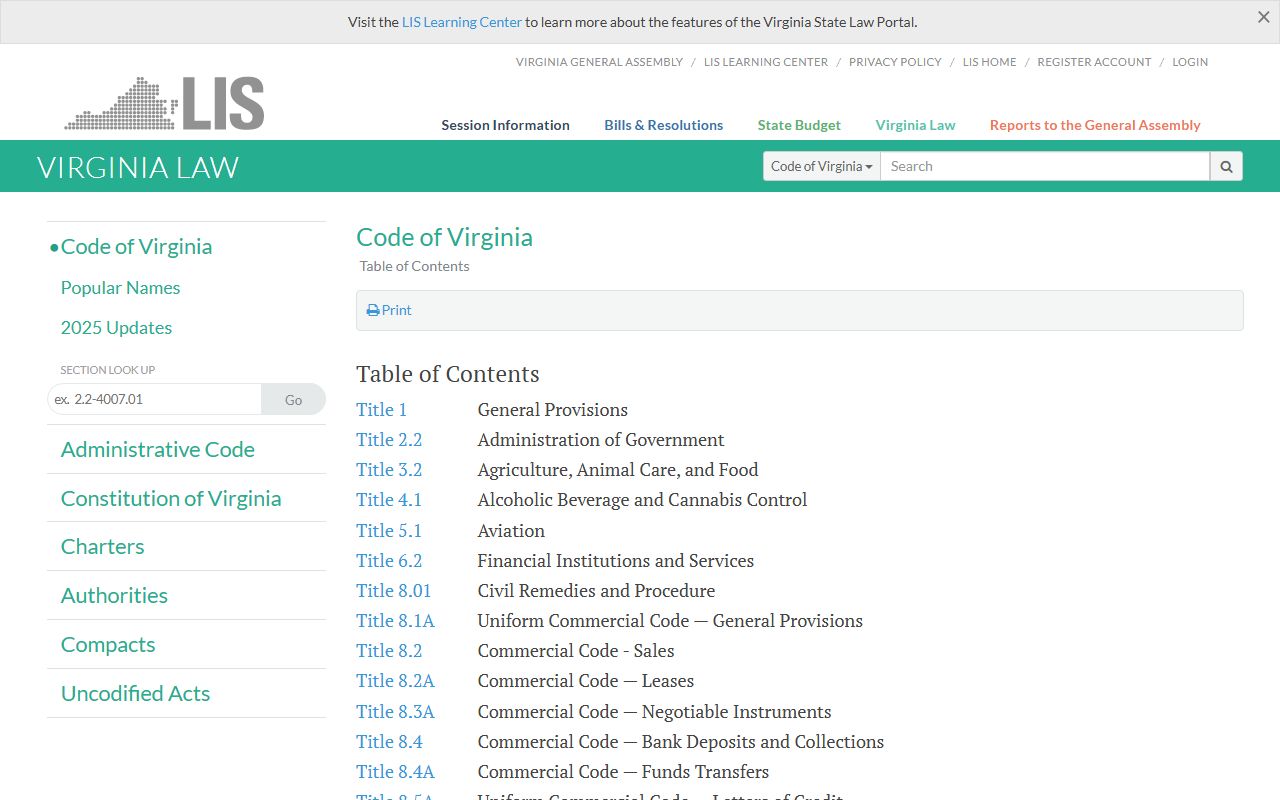
These definitions determine who has the legal right to claim a given piece of property and what types of assets qualify under the state program.
Virginia Unclaimed Money for Deceased Owners
Heirs and estate administrators can claim Virginia unclaimed money on behalf of someone who has passed away. The process follows the same basic steps as a regular claim but needs extra documentation to confirm the claimant's legal authority. To claim property for a deceased owner, you typically need a signed claim form, a current Certificate of Qualification, Letter of Administration, or Small Estate Affidavit, a photo ID for the executor or administrator, proof of the address on file with the property, and a tax identification number if a formal estate was opened. Processing takes up to 60 days after all required documents are received by the Division.
Run a search on any name before assuming property does not exist. People are often surprised to find funds from accounts a deceased family member had forgotten, or from insurance policies taken out long before they passed. The Virginia unclaimed property database covers all property reported since the program started in 1961. Even very old accounts may still show up in the system. Resources for seniors and older adults searching for unclaimed property can be found at VirginiaNavigator. Veterans looking for help with unclaimed property claims can find assistance through Veterans Navigator.
Virginia Unclaimed Property Laws
The rules for Virginia unclaimed money are found in Title 55.1, Chapter 25 of the Code of Virginia, known as the Virginia Disposition of Unclaimed Property Act. The law was first enacted in 1961 and has been updated over the years to keep pace with changes in financial products and technology. The Act runs from Section 55.1-2500 through Section 55.1-2545 and is organized into three articles. Article 1 covers definitions and the rules for when property is presumed abandoned. Article 2 handles reciprocity for property that may also be subject to another state's laws. Article 3 lays out the procedural rules for reporting, remittance, and claims.
Key sections include Section 55.1-2500 for definitions, Section 55.1-2501 for the general abandonment rule, Section 55.1-2524 for holder reporting requirements, and Section 55.1-2532 for the claims process. Reading these sections can help both property owners and business holders understand their rights and duties under state law. The U.S. government's official portal at usa.gov also provides general guidance on finding unclaimed money from federal and state sources.
Additional information about how Virginia's reporting requirements work in practice is available through the Virginia Tech Bursar's Office unclaimed property page, which reflects current state requirements as applied by a large institution. Virginia Tech's procedures require due diligence for any property with a value of $50 or more, which aligns with the state's consumer protection focus.
The Virginia reporting requirements statute shows exactly what holders must do before turning funds over to the state each year.
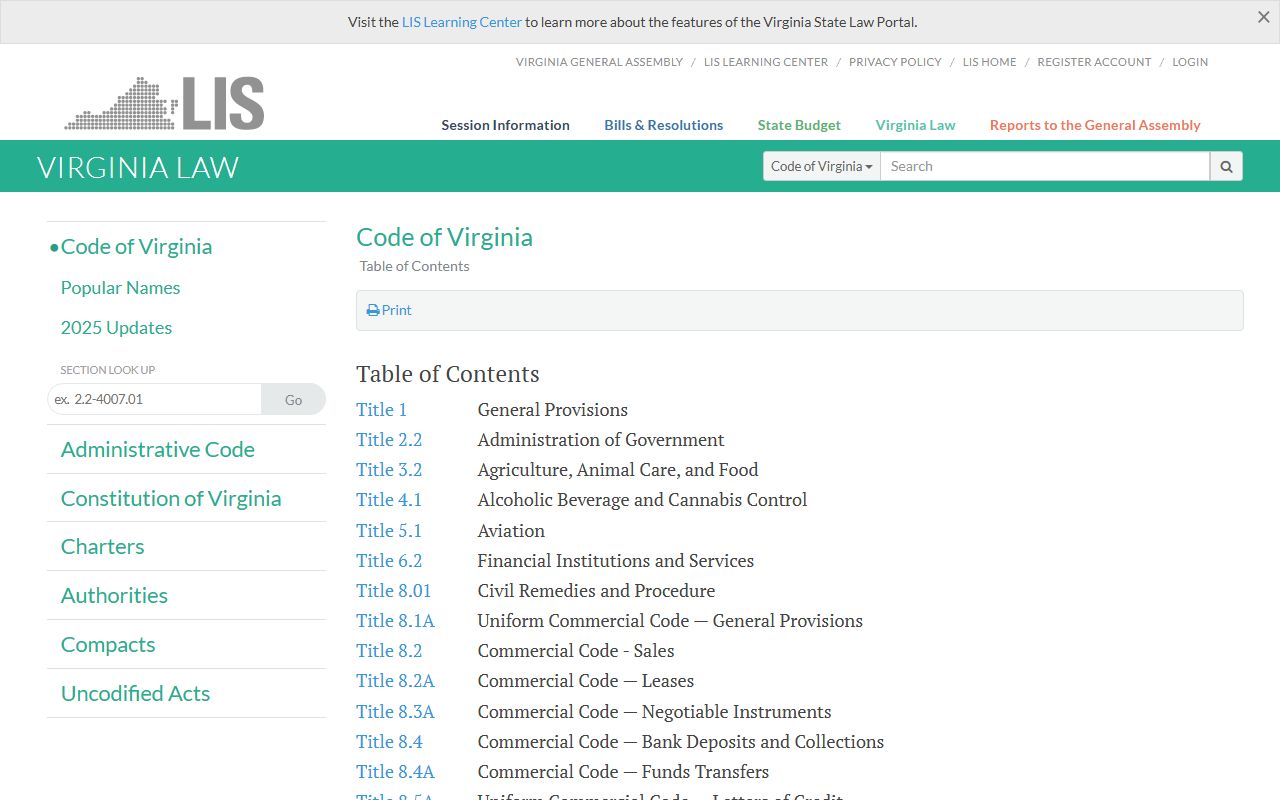
Holders who fail to comply with Virginia reporting deadlines may face penalties, but the state's Voluntary Compliance Agreement program allows eligible businesses to resolve past gaps without fines.
Note: Virginia law imposes no time limit on claims. Property held by the state can be claimed by the rightful owner or heir at any point, regardless of how long it has been sitting in the system.
Browse Virginia Unclaimed Money by County
Virginia unclaimed money can come from any business or employer that operated in the state. Browse by county to find local resources, Treasurer's Office contact information, and details about how unclaimed property rules apply in your area.
Find Unclaimed Money in Major Virginia Cities
Virginia's independent cities handle their own tax collection and are subject to the same unclaimed property reporting laws as county businesses. Select a city below to find resources specific to your area.